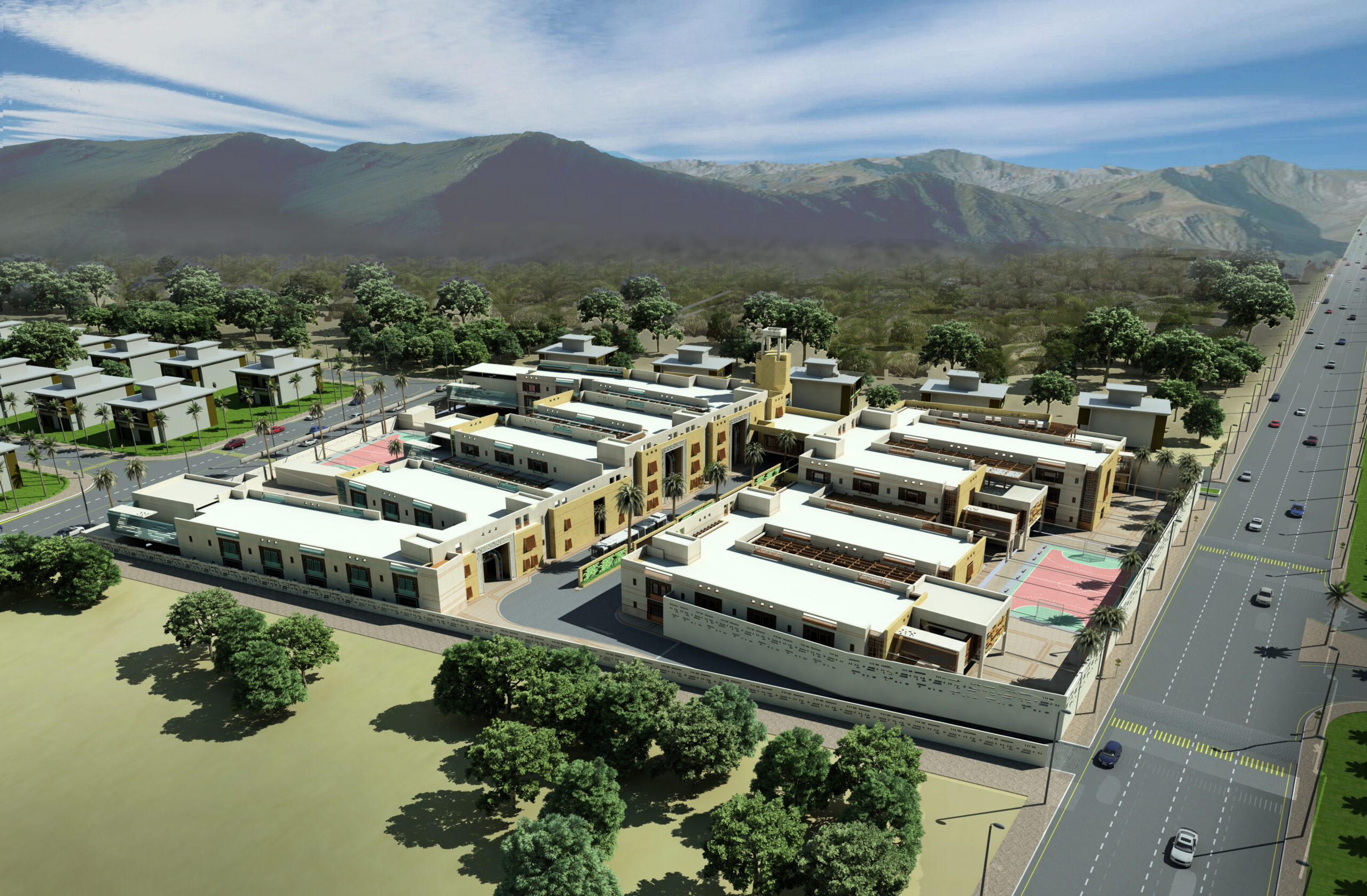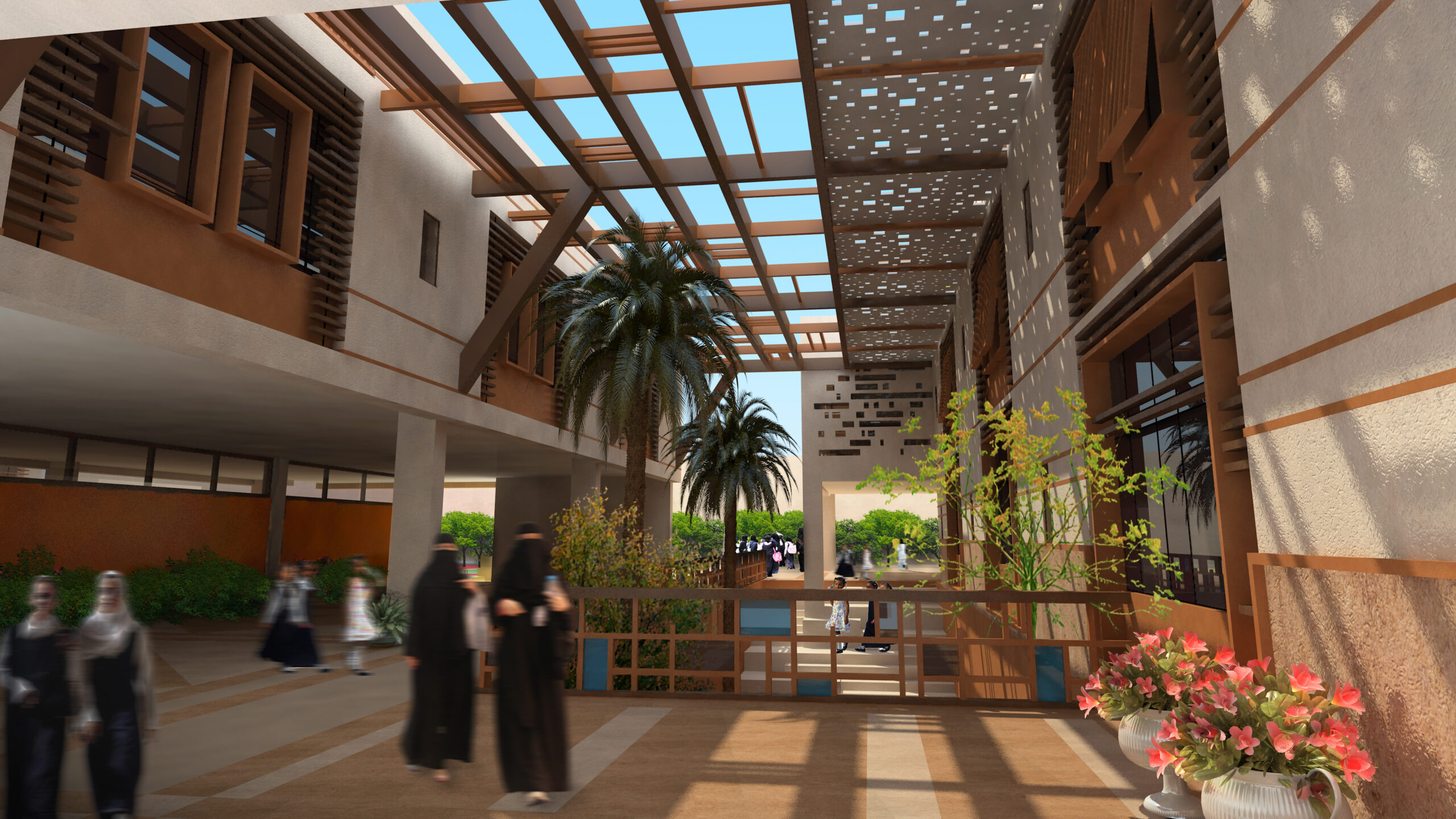
- The architectural concept for Sana El-Ebdaa School draws inspiration from the structure of desert plants , particularly the branching geometry of leaf veins. Just as a main stem feeds smaller branches, the school’s spatial organization begins with a central administrative core that connects to secondary corridors, which in turn lead to classrooms and learning zones.
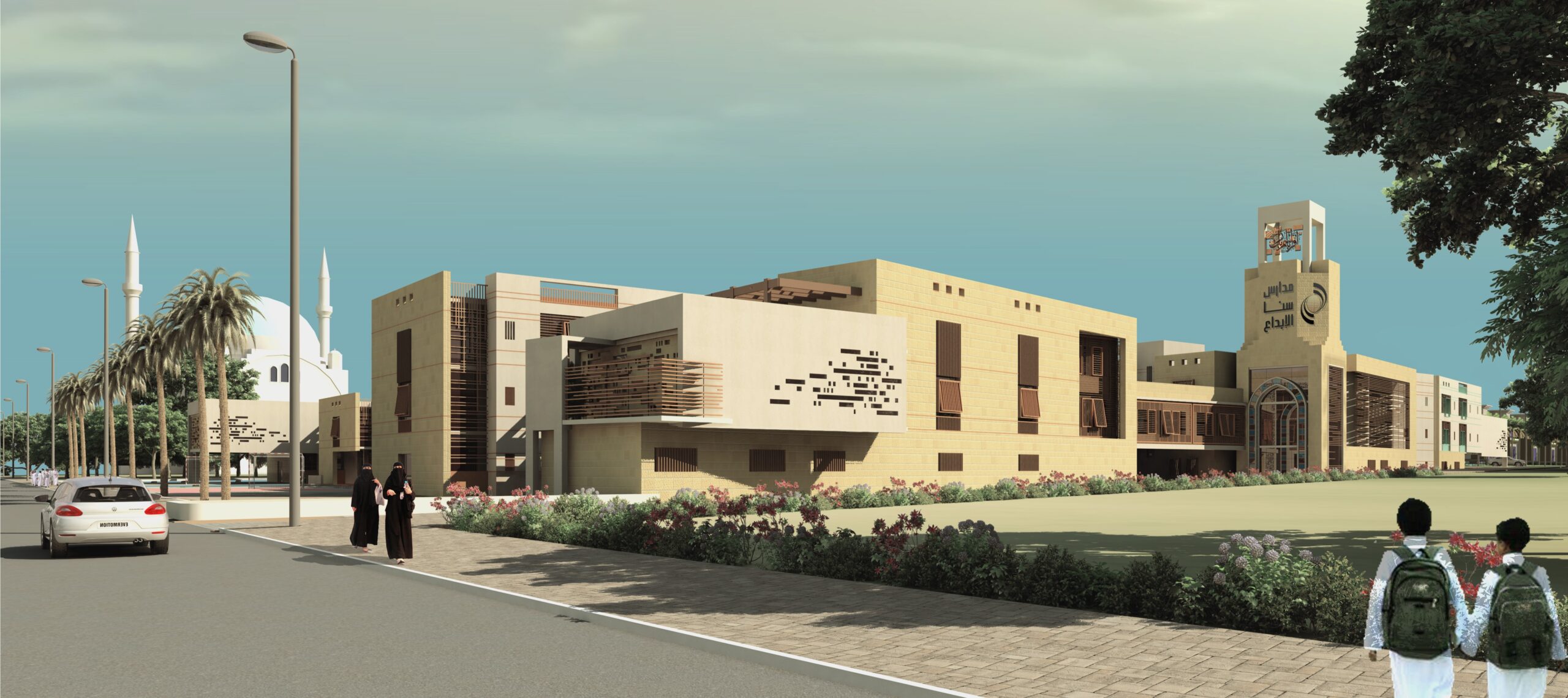
- The building’s external envelope features broken lines, shading elements, and recessed windows , a contemporary interpretation of traditional desert foliage and mashrabiyas. These elements not only reflect the regional context but also enhance environmental performance through passive cooling and daylight control.
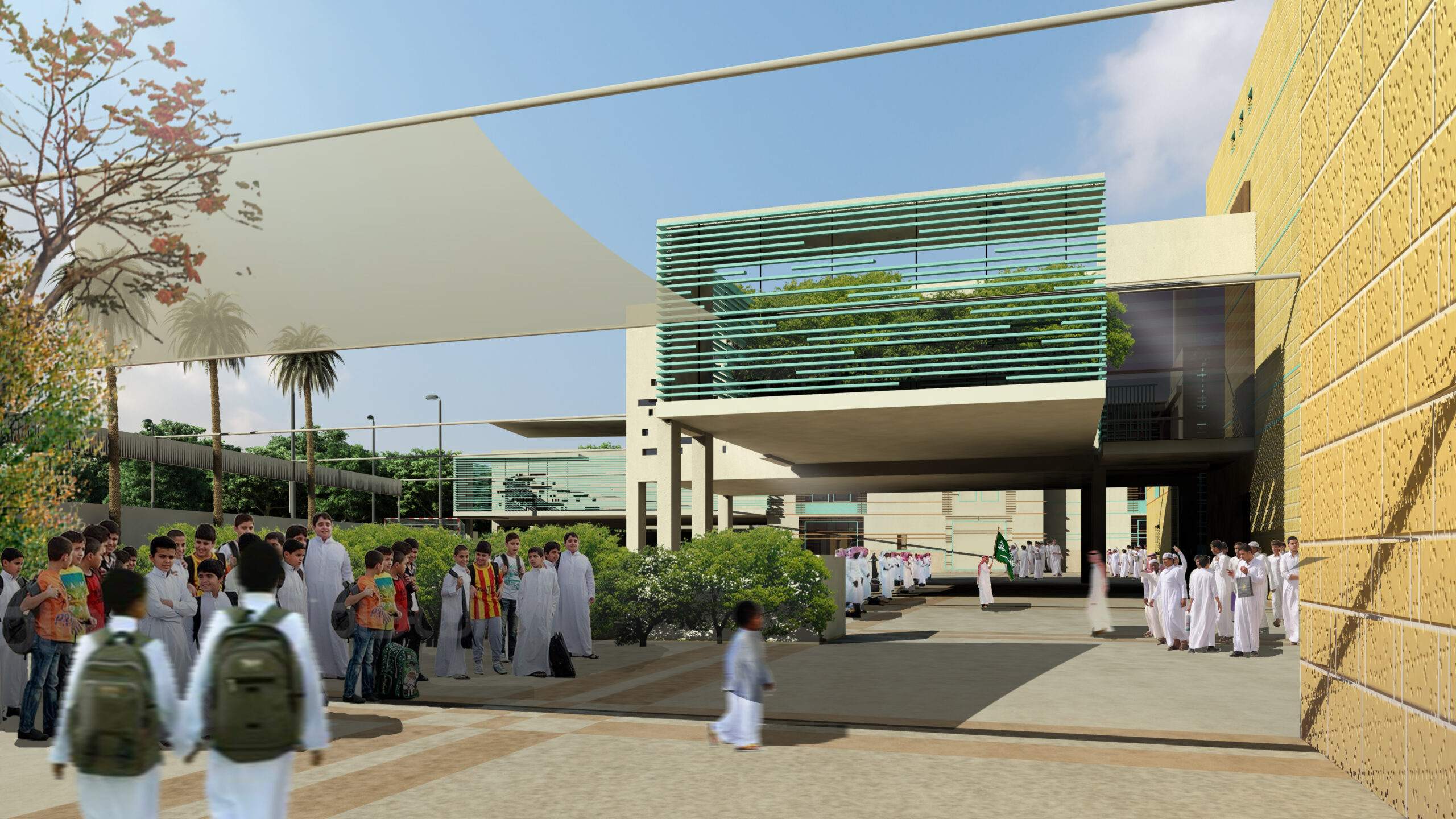
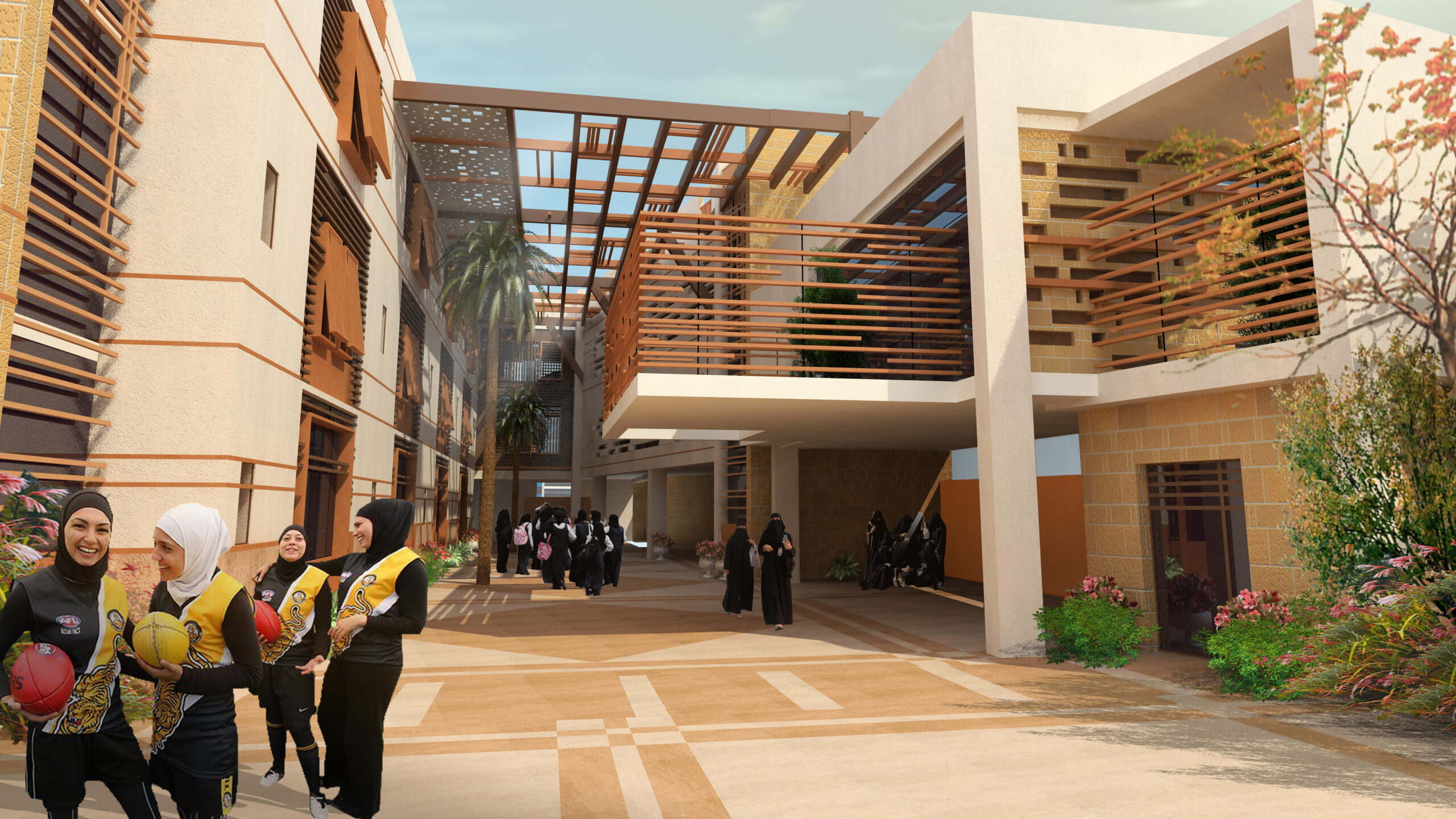
- This layered circulation strategy forms a clear functional hierarchy while generating a series of shaded courtyards that enhance ventilation and daylight. The courtyards serve as both transitional spaces and communal hubs for students and staff. The building’s external envelope features broken lines, shading elements, and recessed windows , a contemporary interpretation of traditional desert foliage and mashrabiyas. These elements not only reflect the regional context but also enhance environmental performance through passive cooling and daylight control.