
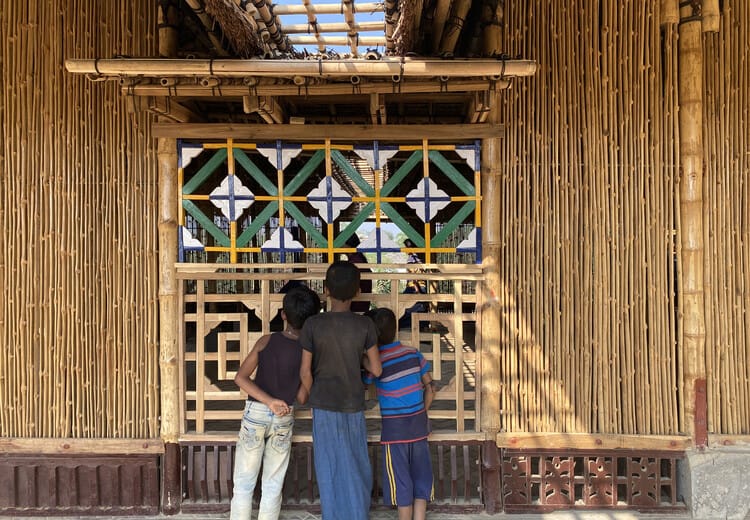
During our architectural tours between Egypt and the Arab Gulf countries, and through what is happening around us in the field of architecture, design, engineering and construction in the entire world, it has become clear that secular concepts dominate the thinking of governments, users, individuals and organizations in a way that warns of the loss of much of what we were founded on as architects, in terms of respect for culture, identity and heritage through dazzling materials (especially glass), lighting and manufactured materials.
It has become imperative for us to organize the field of work in the face of the negatives of these concepts and benefit from their positives.
It is of utmost importance to preserve the distinctive social relationship of Arab societies, in terms of familiarity, affection, hospitality, care and cohesion, within the framework of studying the spaces and architectural elements that sponsor and embrace these behaviors, developing them and knowing the standards governing them. We are talking here (as the famous architect emphasized / Rasem Badran) about the necessity of designing external and interconnected spaces with the same care as designing closed internal spaces so that they are rich in their formations, proportions and materials as an incubator for external societal and individual activities alike.
For example, this is what we tried to achieve in designing the Hayat International Language Academy School, which recently won the Hassan Fathy Appreciation Award for 2014 in school design, as shaping the space is the basic generator in shaping the blocks and their connection, hoping to God and then to the architectural and urban community in Egypt and the Arab world to take this trend into consideration so that we can commit to presenting an architectural product that is extremely influential in preserving our identity alongside the development required to catch up with civilized nations.