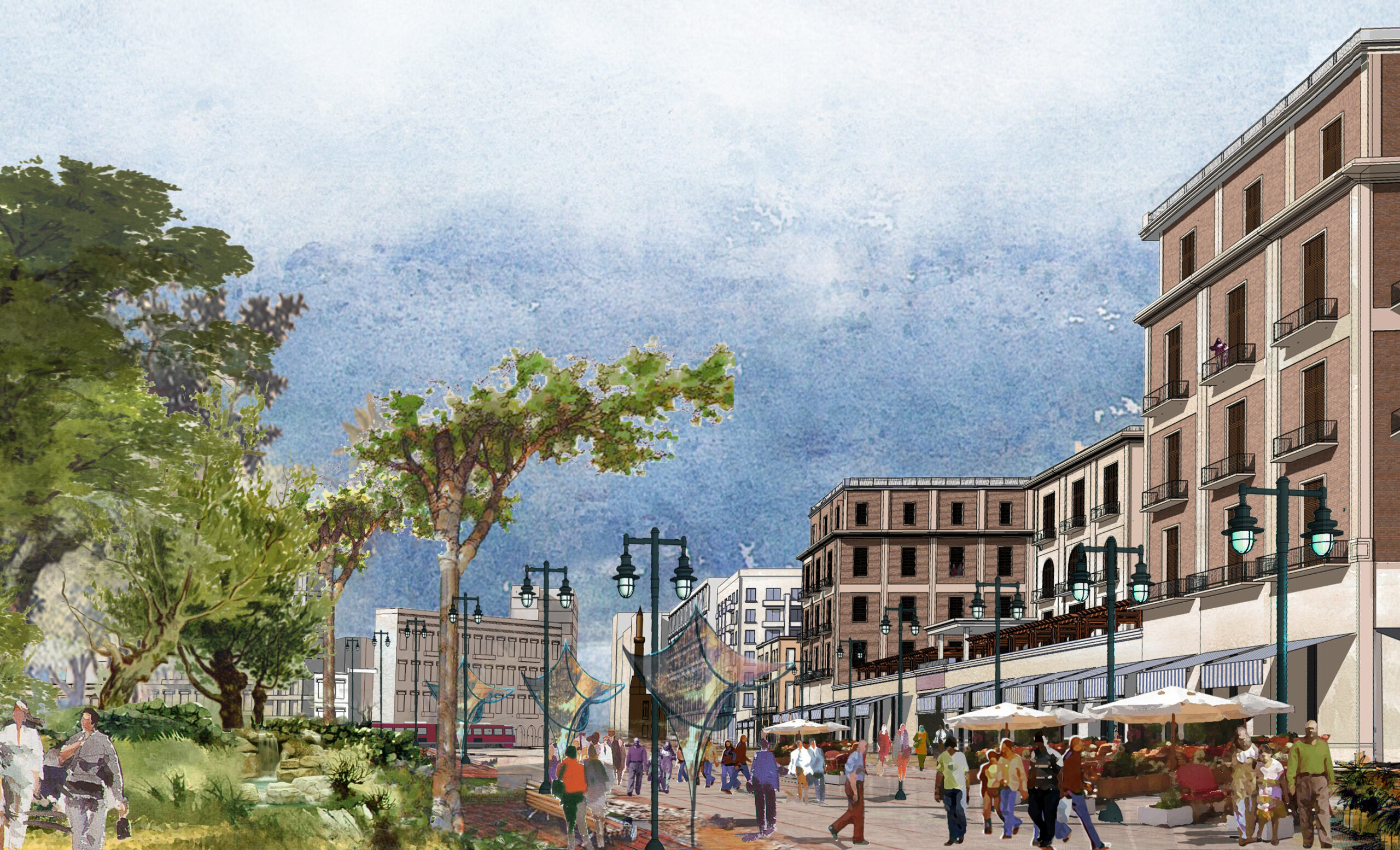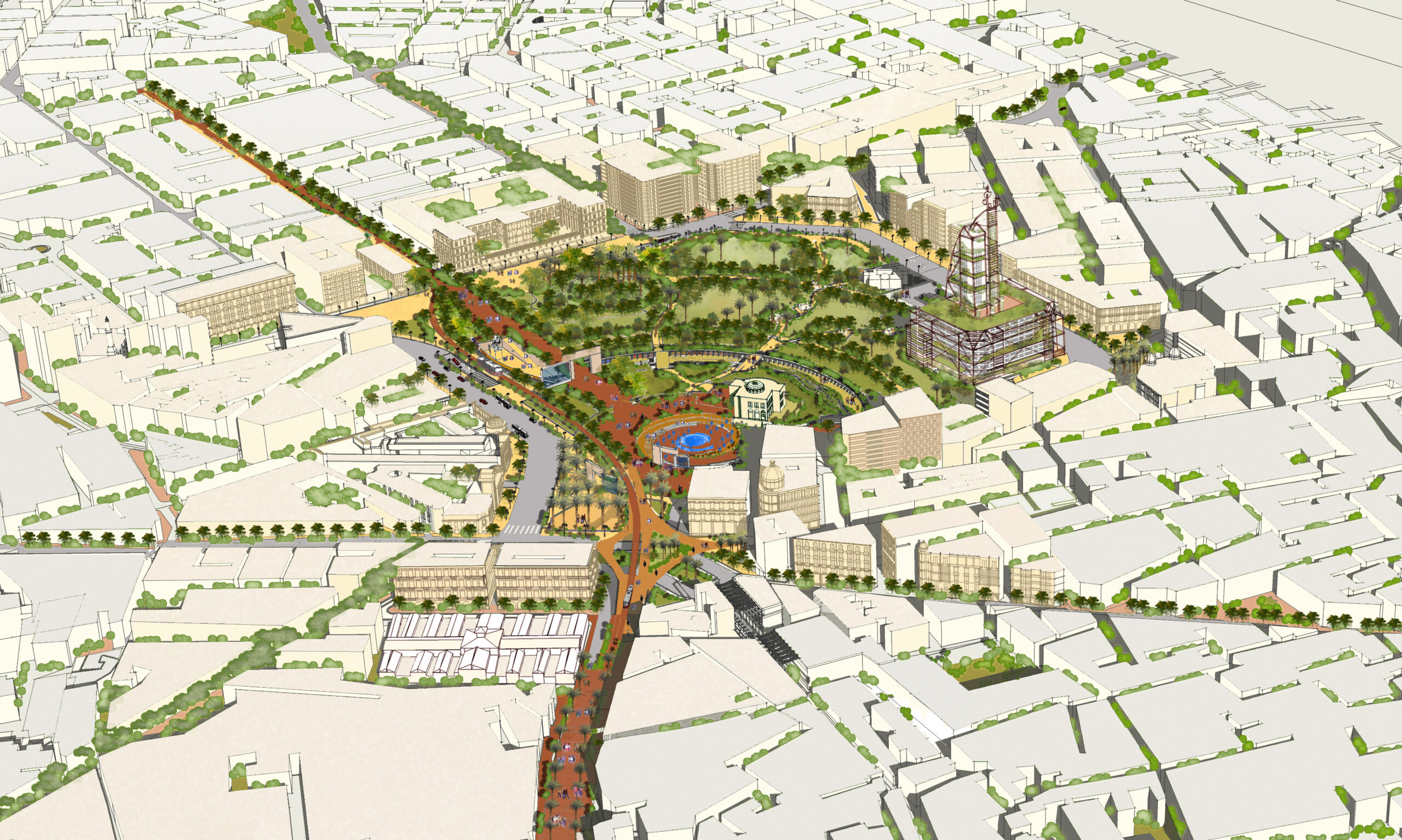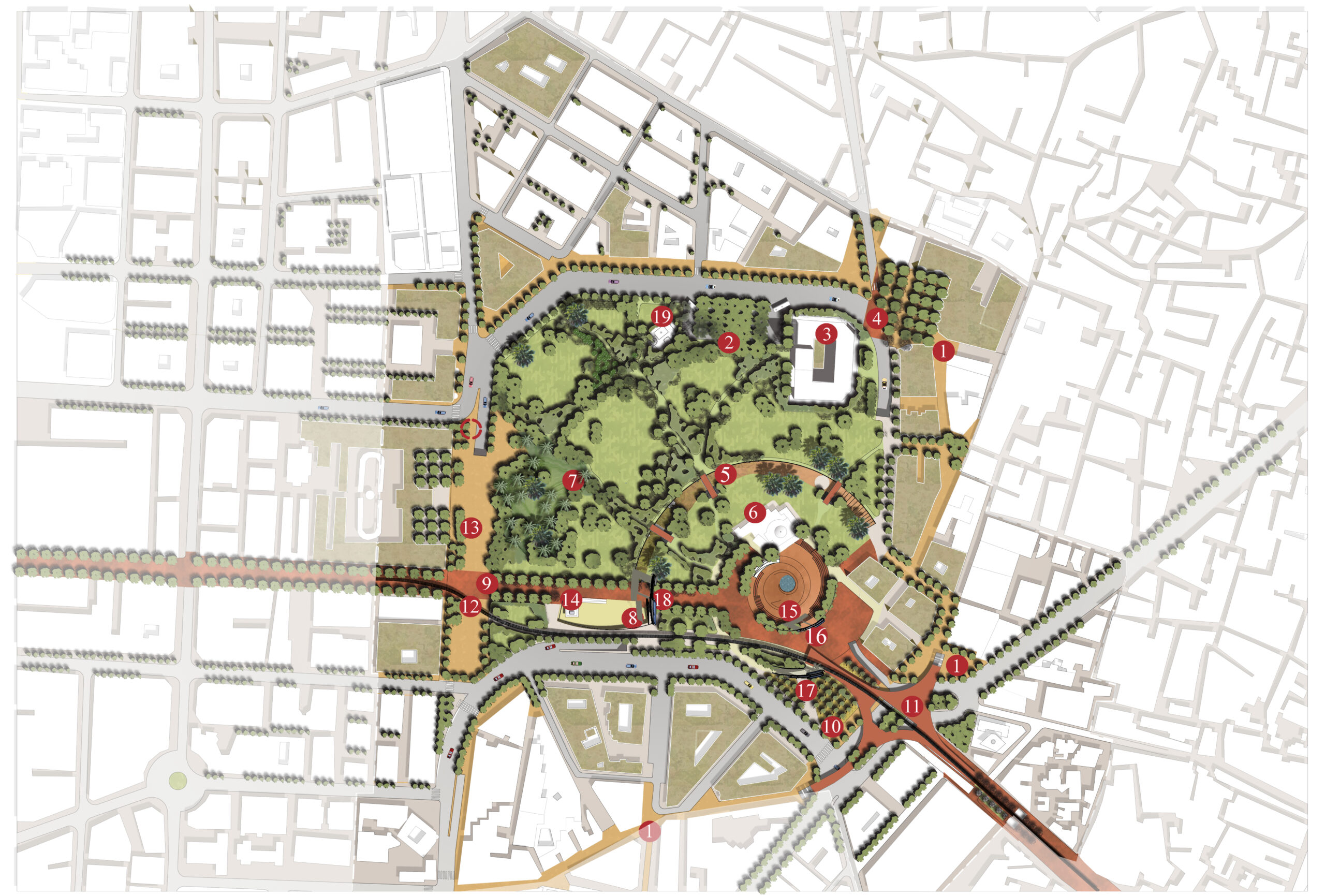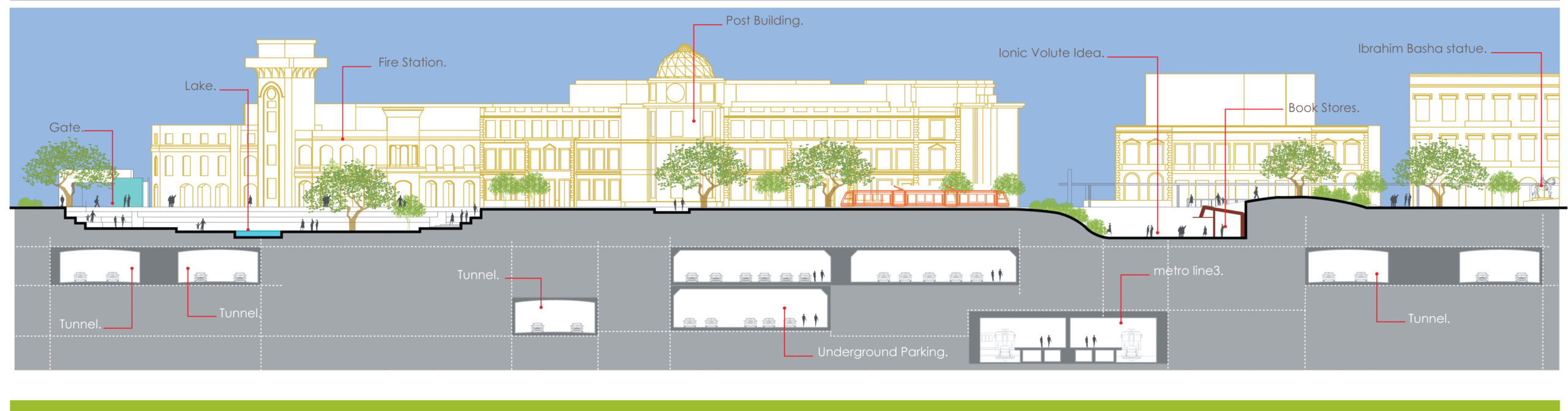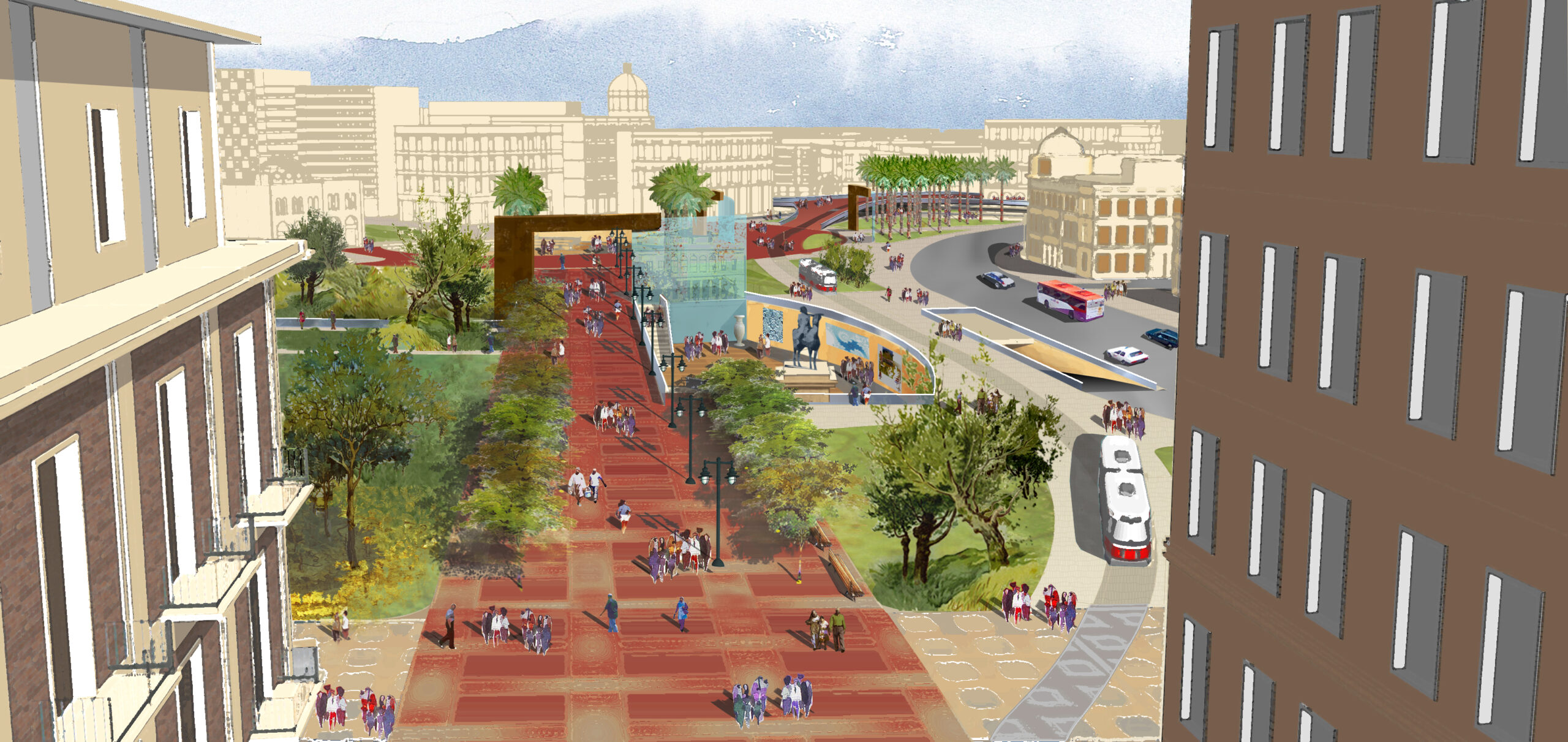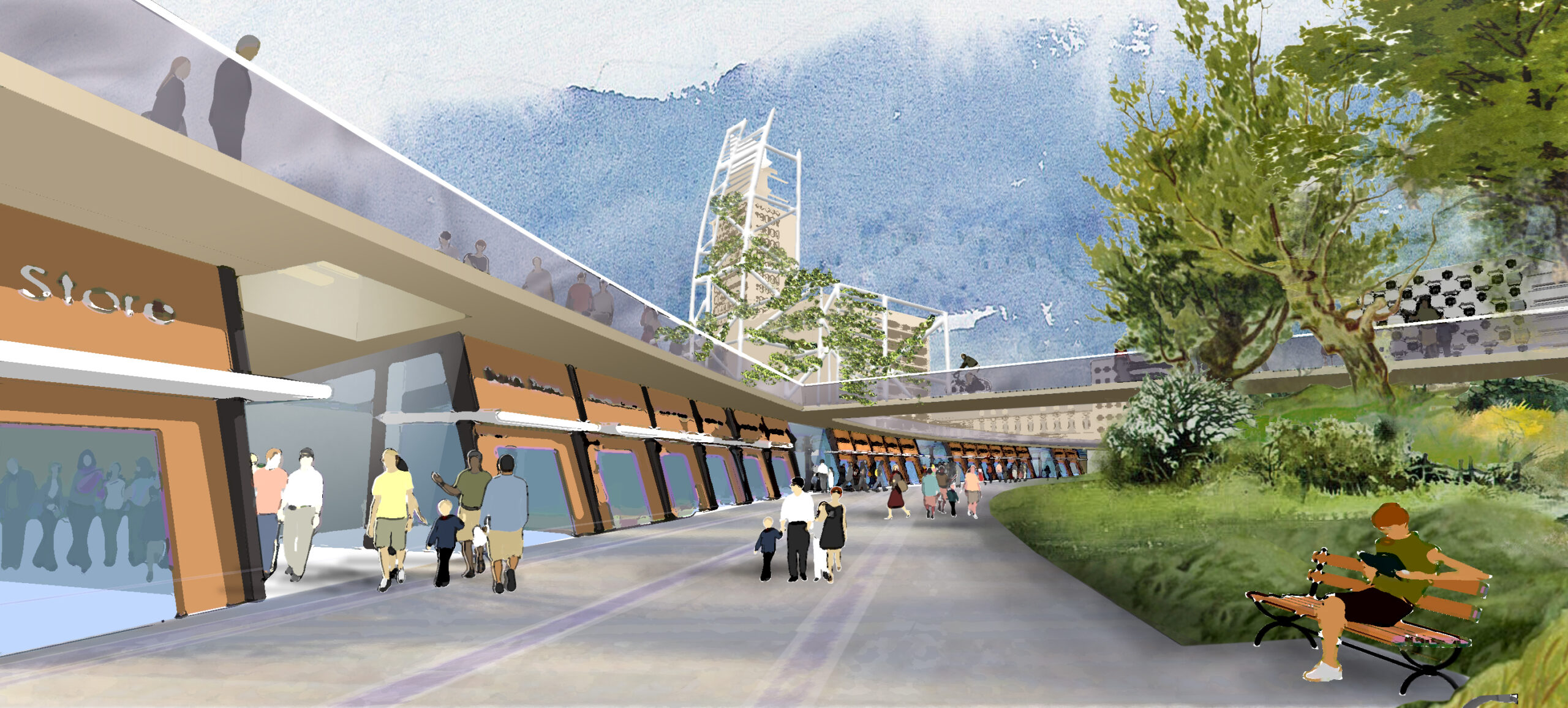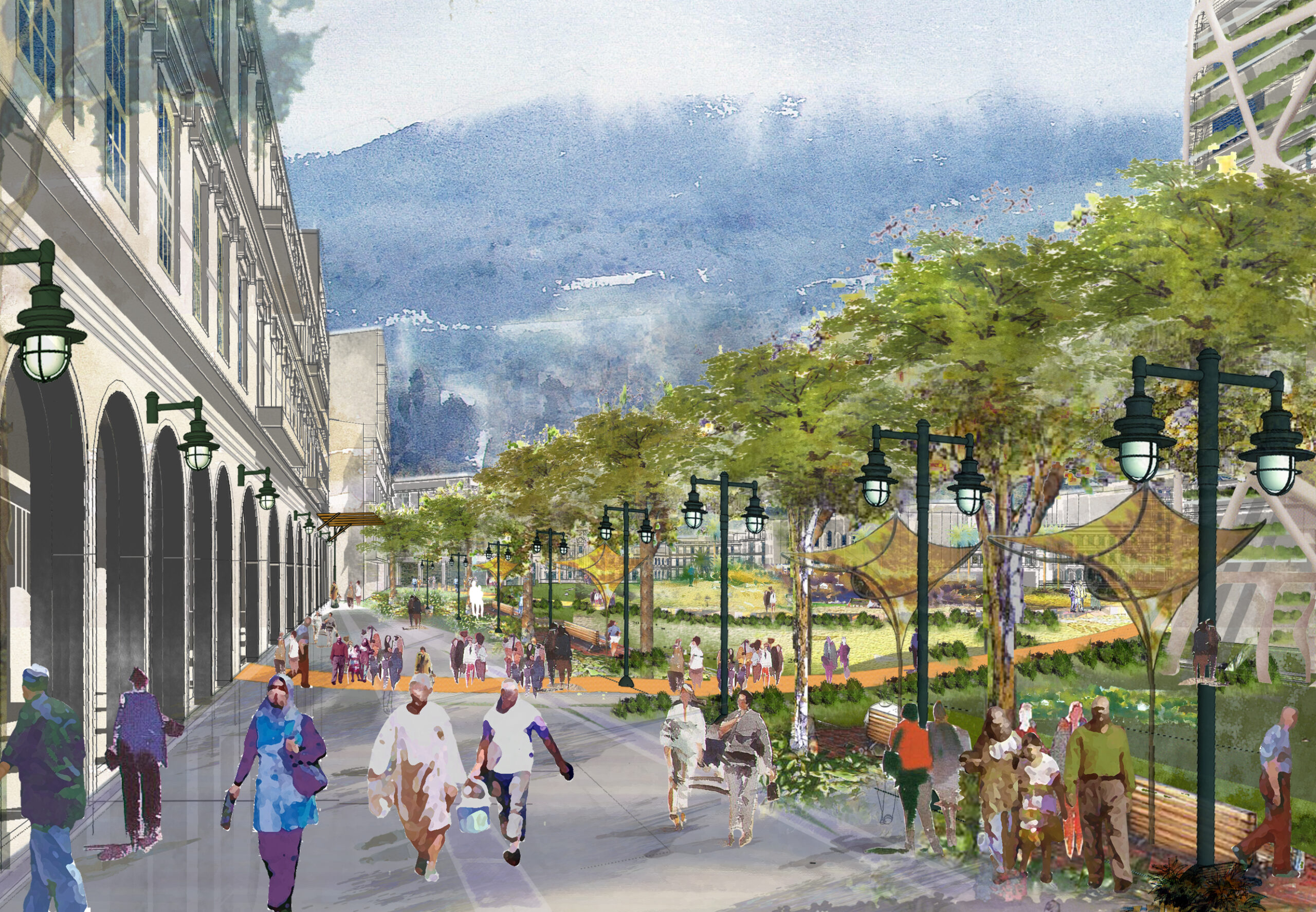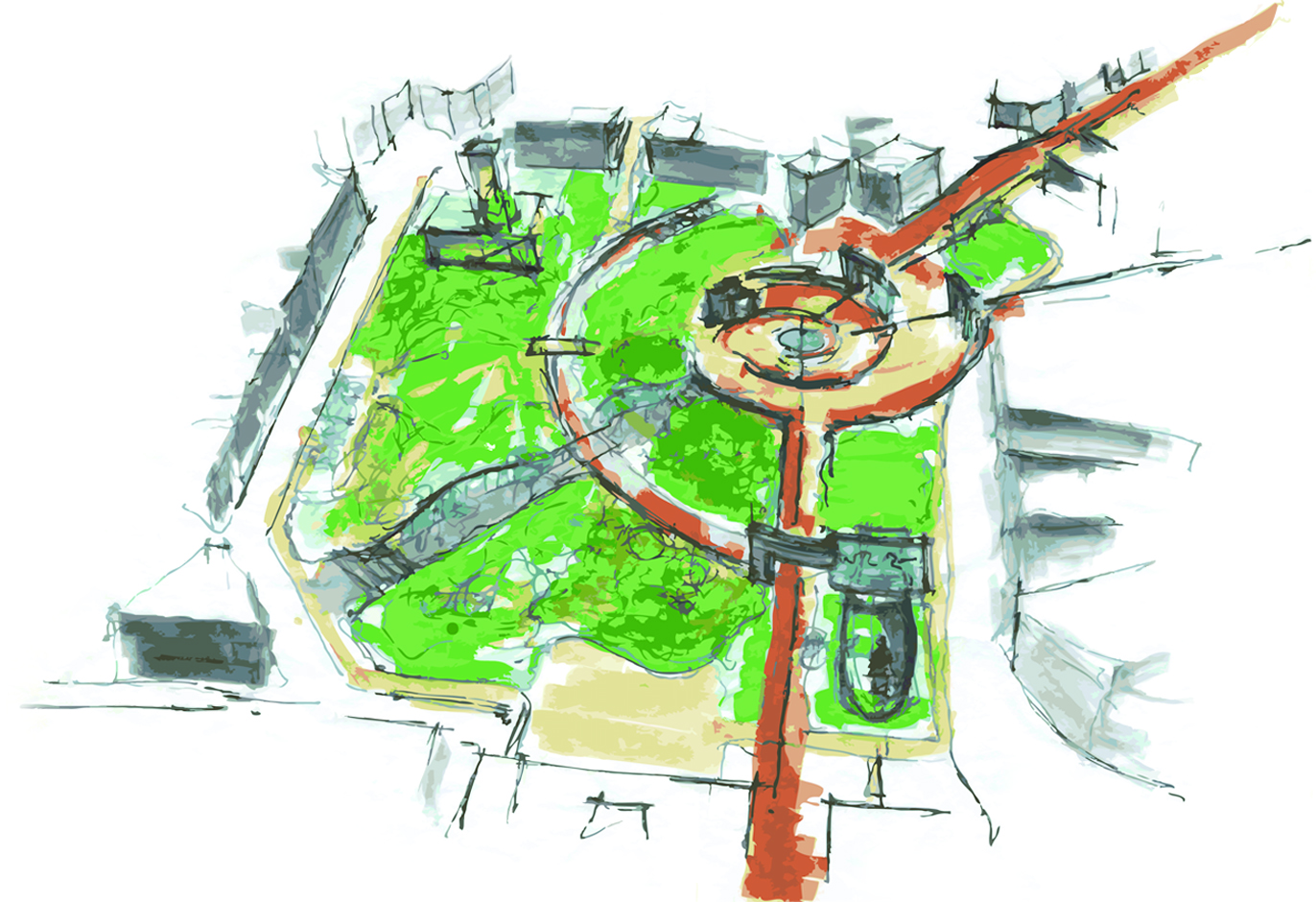
- The design strategies aim to rejuvenate the area by integrating heritage preservation, environmental sustainability, and social vitality. Regulations are enforced to enhance harmony between historic and ordinary buildings, supported by green roofs and the redevelopment of the public communication building as a sustainable landmark. Pedestrian circulation is prioritized through wide walkways, pedestrian-only streets, tunnels, and commercial routes that improve mobility and accessibility between major city squares.
- Functional upgrades include underground parking to ease congestion and the reorganization of informal markets into formal commercial centers, with the historic book market relocated to a cultural plaza. Transportation improvements involve introducing an electric tram and relocating the bus station to reduce pedestrian conflict. Public spaces are reimagined as cultural and green hubs—preserving theaters, creating plazas for celebrations, and transforming Attaba and Opera Squares into vibrant, green urban hearts.
- Environmental and sensory elements such as aromatic plants, fountains, and sound systems enhance user comfort and atmosphere. Finally, three symbolic gates connect the project to Cairo’s historical and cultural routes, reinforcing its role as a sustainable, green, and culturally rich urban center.